Craft · 7 min read · April 28, 2026
Most people smell a perfume the way they read a tweet: one quick inhale, a yes or no, done. But fragrance is not a single moment. It is a structured arc — a sentence with a beginning, a middle, and an end — and learning to read it changes the way you choose, wear, and remember a scent.
That arc has a name in perfumery: the fragrance pyramid.
What the pyramid is
Every composed perfume is built in three stacked layers, defined by how quickly each ingredient evaporates from the skin:
- Top notes (the opening) — the smallest, lightest molecules. They evaporate within 5 to 15 minutes. Citrus, herbs, aldehydes, green leaves.
- Heart notes (the body) — middle-weight molecules. They emerge after the top notes burn off and last 2 to 4 hours. Florals, spices, fruits, soft woods.
- Base notes (the dry-down) — the heaviest, longest-lasting molecules. They start to assert after the heart fades and can persist on skin for 6 to 24 hours. Oud, amber, musk, vanilla, leather, resins.
The names you see on a bottle's note list are arranged in this order for a reason: they describe the order in which you will smell them.
Why the opening lies
The most common mistake in choosing a perfume is buying it at the counter on the strength of the first thirty seconds. That moment belongs to the top notes — and the top notes are designed to be charming, not lasting. They are the perfume's introduction, not its character.
A perfume should be judged at minute 30 (when the heart is fully open) and again at hour 4 (when the base has settled into your skin). What you smell then is the perfume you will live with.
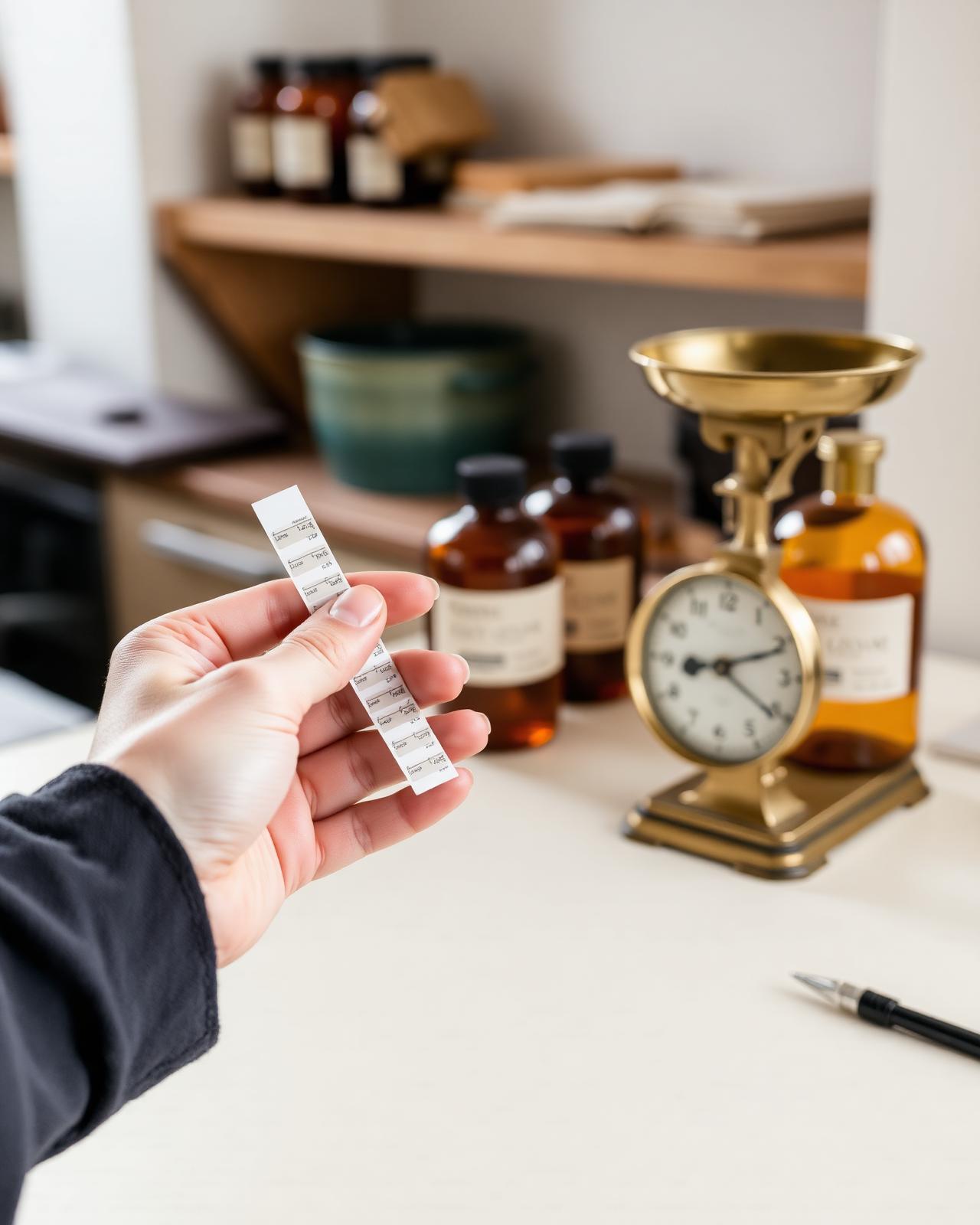
How to test a perfume properly
The professional method is simple and free:
- Spray on the inside of your wrist. Do not rub. Rubbing breaks the top molecules and distorts the opening.
- Walk away. Read a magazine. Have coffee. Do not smell it for 20 minutes.
- Return to your wrist. The heart is now speaking. This is the perfume's personality.
- Check again three hours later. The base is now the loudest voice. This is what your clothes will hold tomorrow.
If you love it at all three checkpoints, buy it. If only at the first, walk away.
Reading the pyramid as a map
Once you know the structure, a note list becomes legible:
- A perfume listed as "bergamot, jasmine, sandalwood" tells you: bright opening, classic floral heart, soft and creamy dry-down. Probably elegant, probably balanced.
- A perfume listed as "saffron, rose, oud" tells you: spicy opening, deep floral heart, intense and resinous dry-down. Probably warm, probably bold, probably long-lasting.
This is not a guess. It is a reading.
Why this matters
The pyramid is not perfumer's jargon. It is a tool for the wearer. Once you can read it, you stop being persuaded by the first impression and start choosing perfumes by what they will say all day.
That is the moment you go from buying scents to wearing fragrance.
Continue reading

Niche vs Designer: What the Difference Really Is
The word "niche" has been stretched until it means nothing. Here is the honest, structural difference — and why it matters.
Oud, From Tree to Bottle: A Perfumer's Field Guide
The world's most expensive perfumery raw material is also its most misunderstood. A grounded look at oud — its origin, its grades, and its honesty.