Craft · 9 min read · May 1, 2026
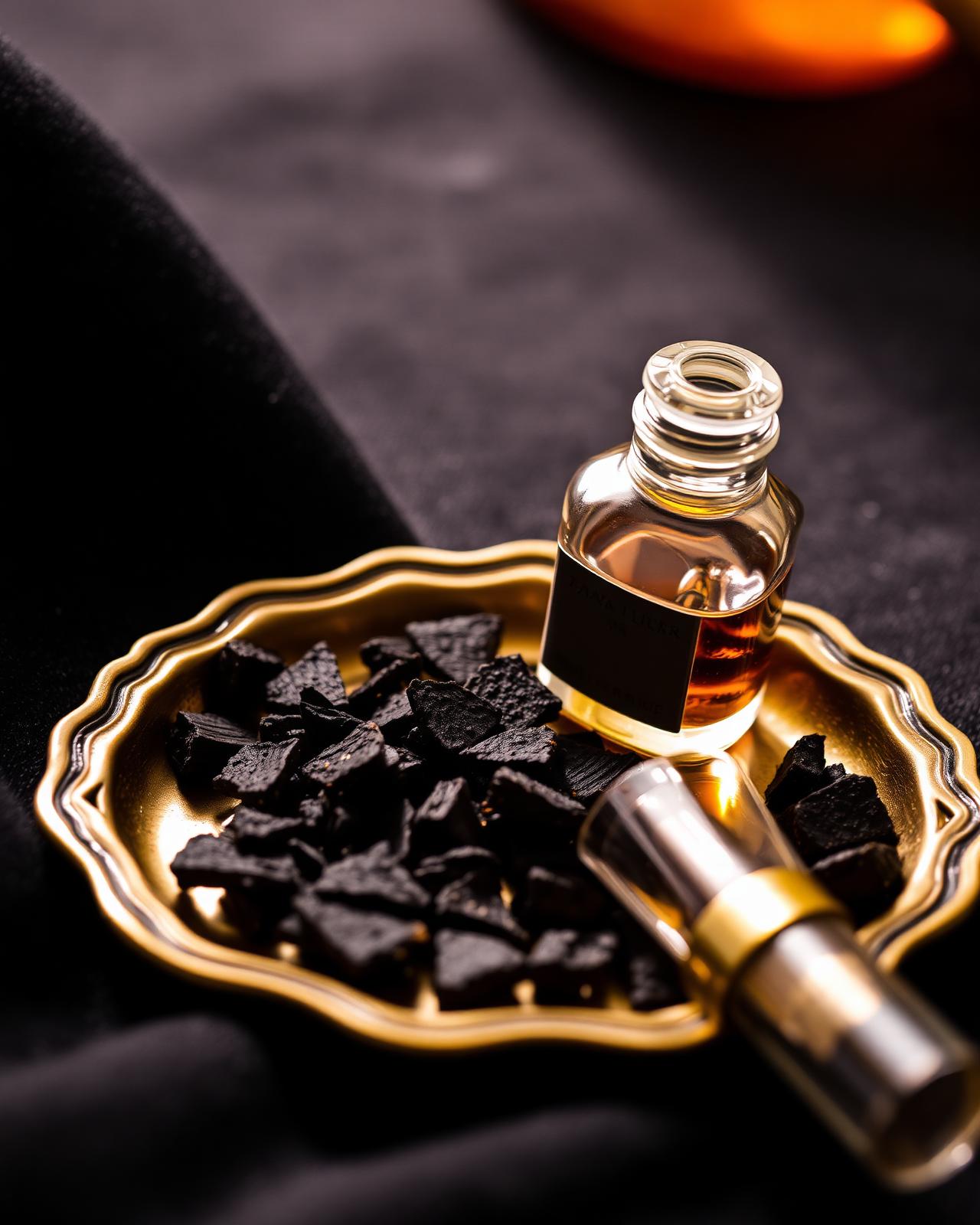
Oud is the most expensive widely-used raw material in modern perfumery. Wholesale prices for true distilled oud oil range from approximately USD 3,000 to over USD 40,000 per kilogram, depending on grade and provenance. To understand what you are paying for — and what you are wearing — you have to understand where it comes from.
The biology
Oud (also written oudh or aoud; called agarwood in English-language botany) is a dark, resinous heartwood produced by trees of the Aquilaria and Gyrinops genera, native to South and Southeast Asia. The resin does not form in healthy trees. It is a defensive response: when the tree is wounded and infected by a specific mould, it floods the affected wood with aromatic compounds (sesquiterpenoids and chromones) to seal the damage.
Over years — sometimes decades — the infected wood transforms into agarwood. The longer the infection lives, the deeper the resin saturation, and the more valuable the wood.
The origins
Different growing regions produce different aromatic profiles. Three of the most prized:
- Hindi (Indian) oud — from Assam and surrounding regions of northeast India. Animalic, dark, leathery, often described as "barnyard" in its raw form. Beloved in the Gulf, polarising elsewhere.
- Cambodi (Cambodian) oud — from Cambodia and parts of Laos and Vietnam. Sweeter, fruitier, with a more accessible woody warmth. Often the gateway oud for new collectors.
- Maroke oud — historically from the Mer region; today the term is used loosely. Sweet, cooler, with a hint of cooked fruit.
Other notable origins include Borneo, Trat (Thailand), and increasingly Assam-cultivated agarwood from sustainable plantations.
How oud reaches a perfume
There are two main forms used in fragrance:
- Distilled oud oil (dehn al oud) — the wood chips are soaked in water and steam-distilled, often over multiple distillation cycles. Yield is brutally low: approximately 1 to 2 kilograms of oil per 100 kilograms of agarwood chips, varying widely with grade.
- Oud accord (synthetic or reconstructed) — modern perfumery often uses molecules like Z11 and Iso E Super, blended with woody and resinous synthetics to evoke the character of oud at a fraction of the cost.
Most "oud" fragrances on the global market are accords, not real oud oil. This is not necessarily dishonest — a well-built accord can be beautiful — but the difference is the same as between sparkling wine and Champagne: structurally not the same thing.
How to tell the difference
A trained nose can tell within seconds. Untrained noses can use proxies:
- Price. A 50ml eau de parfum that contains meaningful amounts of real oud oil cannot retail for €60. The math does not work.
- Longevity. Real oud has staying power that synthetics struggle to match — particularly in the dry-down, where the resin notes deepen over hours rather than fade.
- Complexity. Real oud is never one note. It moves: leather, smoke, honey, animalic, sweet, dry. Accords tend to stay flatter.
How Lecmo uses oud
We use both. Where the composition demands the depth and shift of real oil, we use it. Where a cleaner, more transparent oud character serves the perfume, we build an accord around real oud at lower concentration plus carefully chosen molecules.
Honesty matters more than purity. A perfume that uses an oud accord well is more honest than a perfume that claims "real oud" and contains a trace.
The bottle should tell the truth.
Continue reading
Niche vs Designer: What the Difference Really Is
The word "niche" has been stretched until it means nothing. Here is the honest, structural difference — and why it matters.
The Fragrance Pyramid: How to Read Top, Heart, and Base Notes
A perfume is a sentence with a beginning, middle, and end. Here is how to read its three layers — and why the order matters.